Why High-Resolution Data Is the Missing Link in Industrial Troubleshooting
Application
Unexpected machine stoppages, recurring quality deviations, and intermittent process disturbances remain among the most challenging problems in industrial production. While modern automation systems generate vast amounts of operational data, maintenance and engineering teams often face a frustrating reality: when a problem occurs, the available information does not provide enough detail to explain why it happened.
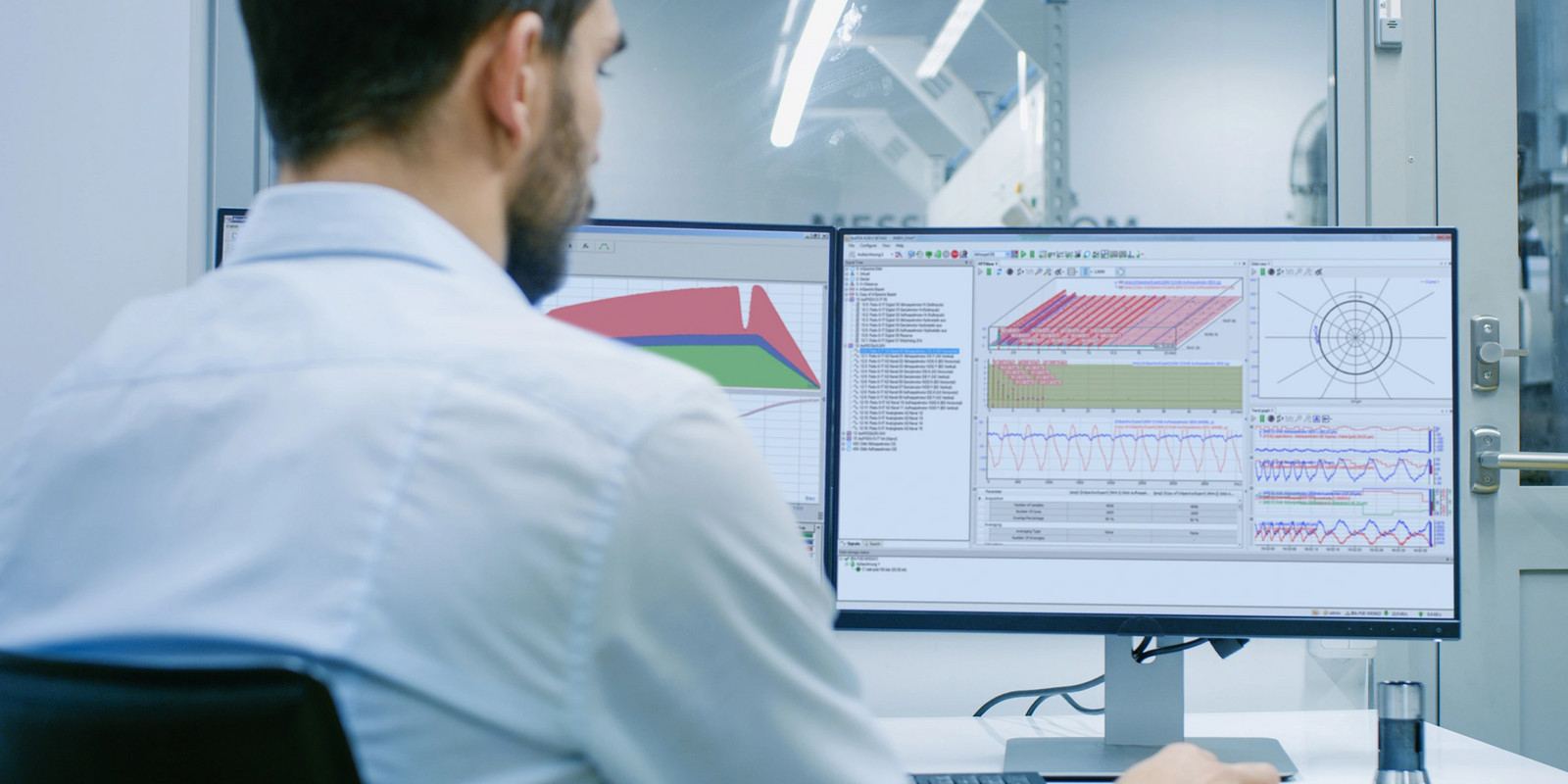
Traditional troubleshooting methods typically rely on PLC diagnostics, SCADA trends, historian data, and operator observations. Although these tools provide valuable insight into plant operation, they are often limited by sampling rates and data granularity. As a result, critical events may occur between recorded samples and remain invisible during root cause investigations.
In many cases, the issue is not a lack of data, but a lack of sufficiently detailed data. High-resolution data acquisition addresses this challenge by providing a precise, time-synchronized view of machine and process behavior, enabling engineers to reconstruct events with a level of accuracy that is not possible with conventional monitoring systems.
Why Traditional Process Data Often Falls Short
Industrial historian and SCADA systems are primarily designed for production monitoring, reporting, and performance analysis. They excel at tracking long-term trends and key performance indicators, but they are typically not intended to capture fast, transient events that occur within milliseconds.
Many production problems originate from precisely these short-duration events. Typical examples include:
- A valve opens slightly later than expected.
- An interlock changes state for only a few milliseconds.
- A sensor experiences a brief disturbance.
- Multiple digital signals occur in the wrong sequence.
- A vibration spike triggers a downstream effect that is no longer visible in recorded data.
While each of these events may seem insignificant in isolation, they can ultimately result in quality defects, process instability, or unexpected machine downtime.
The challenge becomes even greater when multiple events interact. A fault condition may result not from a single cause, but from a specific sequence of signal changes occurring within a narrow time window. If the available data lacks sufficient resolution, engineers are forced to make assumptions about what happened rather than relying on objective evidence.
Consequently, troubleshooting efforts often become time-consuming exercises in eliminating possibilities rather than identifying demonstrable causes.
The Power of High-Resolution Data Acquisition
High-resolution data acquisition with the iba system provides a different approach by continuously recording signals at significantly higher sampling rates than conventional monitoring systems. Rather than analyzing broad trends, engineers gain the ability to observe the precise timing relationships between machine signals, sensor inputs, drive responses, and control actions. Events can be reconstructed in the exact order in which they occurred, allowing investigations to focus on facts rather than assumptions.
This level of visibility enables engineering teams to:
- Reconstruct events leading up to a fault.
- Measure precise timing relationships between signals.
- Detect sequencing problems in automated processes.
- Analyze cause-and-effect relationships with confidence.
- Quantify process variations that would otherwise remain hidden.
- Reduce troubleshooting time by focusing directly on the root cause.
By capturing process data with millisecond or even microsecond resolution, engineers can determine exactly what happened before, during, and after a disturbance. Instead of relying on repeated testing and trial-and-error methods, maintenance teams can use recorded data to identify the underlying source of a problem more quickly and accurately.
Enhancing Existing Automation Systems
A common misconception is that achieving this level of diagnostic capability requires a complete modernization of the automation infrastructure. In practice, many facilities can significantly improve process visibility without replacing existing control systems.
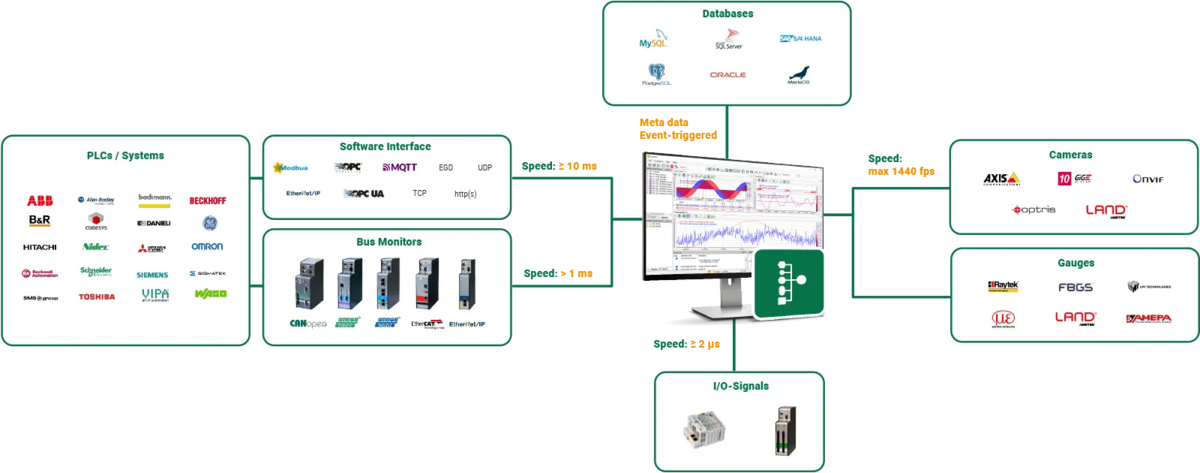
A dedicated data acquisition platform can operate alongside established PLC, SCADA, and historian environments, gaining additional information while preserving the existing automation architecture.
This approach allows organizations to expand their diagnostic capabilities incrementally. Engineering teams gain access to higher-resolution information without disrupting production or undertaking large-scale automation projects.
Platforms such as ibaPDA are designed specifically for this purpose. ibaPDA continuously acquires, synchronizes, and stores data from automation systems, drives, sensors, and industrial communication networks, providing a comprehensive view of machine and process behavior across an entire production environment.
Monitoring Industrial Communication Networks
Many modern production processes rely heavily on industrial Ethernet communication. As machine complexity increases, communication issues can become difficult to identify using traditional diagnostic methods.
Dedicated Profinet monitoring devices expand system visibility by capturing communication data directly from the network. This allows engineers to observe both process values and communication behavior without requiring extensive modifications to PLC programs.
The approach provides access to information that is often difficult to obtain through conventional diagnostics, including:
- Communication timing behavior.
- Network-related state changes.
- Intermittent communication disturbances.
- Signal interactions across multiple controllers.
- Communication sequences preceding a fault event.
Network-level monitoring can be particularly valuable when investigating intermittent disturbances that cannot easily be reproduced. By extending diagnostics beyond the PLC and into the communication infrastructure itself, engineers gain a more complete understanding of the systems they are troubleshooting.
High-Speed Acquisition Beyond Conventional Monitoring
Some industrial applications require significantly higher sampling rates than those typically available through standard automation systems. Mechanical events, vibration phenomena, energy disturbances, and sensor dynamics often occur too quickly to be captured through conventional data collection methods.
Dedicated acquisition hardware such as ibaPADU addresses these requirements by recording analog and digital signals at sampling rates of up to 150 kHz. Such high-frequency acquisition makes it possible to analyze signal behavior that would otherwise remain invisible.
This capability supports a wide range of diagnostic and analytical applications:
- Sensor diagnostics.
- Vibration monitoring.
- Mechanical condition monitoring.
- Energy analysis.
- Power quality investigations.
- Dynamic process analysis.
For short-duration events, even small increases in sampling frequency can reveal previously hidden patterns. High-speed acquisition provides the level of detail required to identify subtle process interactions that may ultimately lead to production losses, equipment damage, or quality defects.

In many investigations, the missing link is not expertise. It's visibility. High-resolution data provides the level of detail needed to uncover root causes that remain hidden in conventional trending systems.
Dries Boone
General Manager, iba Benelux
The Importance of a Common Time Base
One of the greatest challenges in industrial troubleshooting is the fragmentation of information across multiple systems.
Process data may be stored in PLC historians, electrical measurements may originate from specialized monitoring equipment, vibration information may reside in dedicated condition monitoring systems, and quality records may exist in separate databases. Each source contains valuable information, but correlating events becomes difficult when timestamps differ or synchronization is lacking.
Typical disconnected data sources include:
- PLC trend data.
- Electrical measurements.
- Vibration monitoring systems.
- Quality databases.
- Operator observations.
- Production event logs.
The iba system addresses this issue by synchronizing information from diverse sources onto a common timeline. This enables engineers to compare events across multiple systems with high temporal accuracy.
When machine states, process values, drive parameters, network communication, and external measurements all share the same time reference, identifying relationships becomes significantly easier.
The result is a clearer and more complete picture of production behavior during critical events.
Adding Visual Evidence to Process Data
Although process signals provide essential information, they do not always tell the whole story. Many industrial issues have a physical or visual component that cannot be fully understood through numerical data alone.
Examples include:
- Material positioning errors.
- Product handling problems.
- Intermittent jams.
- Mechanical anomalies.
- Surface defects and quality issues.
To address this requirement, ibaPDA can synchronize camera recordings with process data acquisition. Recorded images become part of the same timeline as machine signals and process measurements, allowing engineers to review visual events in direct relation to recorded process conditions.
This combined perspective enables the simultaneous evaluation of:
- Sensor values.
- Machine states.
- Drive behavior.
- Energy consumption.
- Vibration signatures.
- Camera images captured at the same moment.
When investigating complex production issues, visual context frequently provides crucial information that accelerates root cause identification and reduces uncertainty during analysis.
From Fault Analysis to Continuous Improvement
Organizations often introduce high-resolution data acquisition primarily to improve troubleshooting and reduce downtime. However, the value of detailed process information quickly extends far beyond maintenance activities.
The same data that supports fault investigations can also be used for:
- Process optimization.
- Energy efficiency initiatives.
- Quality improvement programs.
- Predictive maintenance strategies.
- OEE improvement projects.
- Reliability engineering studies.
As engineers gain access to more detailed information about machine and process behavior, opportunities for continuous improvement become easier to identify and quantify. Process variations that were previously hidden become measurable, enabling more informed operational decisions.
Over time, high-resolution process data evolves from a troubleshooting resource into a strategic foundation for data-driven manufacturing improvement.
Conclusion
Many industrial facilities already operate sophisticated automation systems but still struggle to identify the root causes of intermittent faults, unexplained quality variations, and recurring production disturbances. In these situations, additional automation is often not the answer. What is missing is detailed visibility into what actually happened during critical events.
High-resolution data acquisition addresses this gap by capturing process and machine behavior at the level of detail required for accurate root cause analysis. Through synchronized recording of automation data, network communication, high-speed analog and digital signals, and even camera images, engineers gain a comprehensive view of production events that would otherwise remain hidden.
By combining detailed acquisition capabilities with a common time reference across multiple data sources, solutions such as ibaPDA enable maintenance and operations teams to move from assumption-based troubleshooting to evidence-based analysis. In an industrial environment where every minute of downtime has a measurable impact on productivity and profitability, the ability to see what truly happened can make the difference between repeatedly treating symptoms and permanently eliminating the root cause.
