IEC 61850 Substation Monitoring
Accurately acquire events in substations: Thanks to its IEC 61850 interfaces, the iba system enables status information to be obtained from the IEC…
Learn more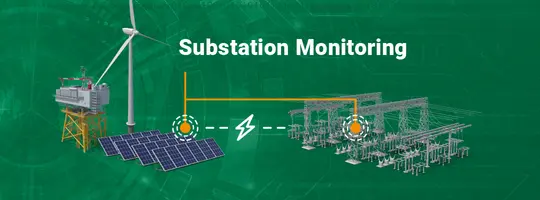
Electric systems react extremely quickly to errors. Compensation processes then quickly kick in, but they have the potential to destroy equipment if they are not clarified without delay.
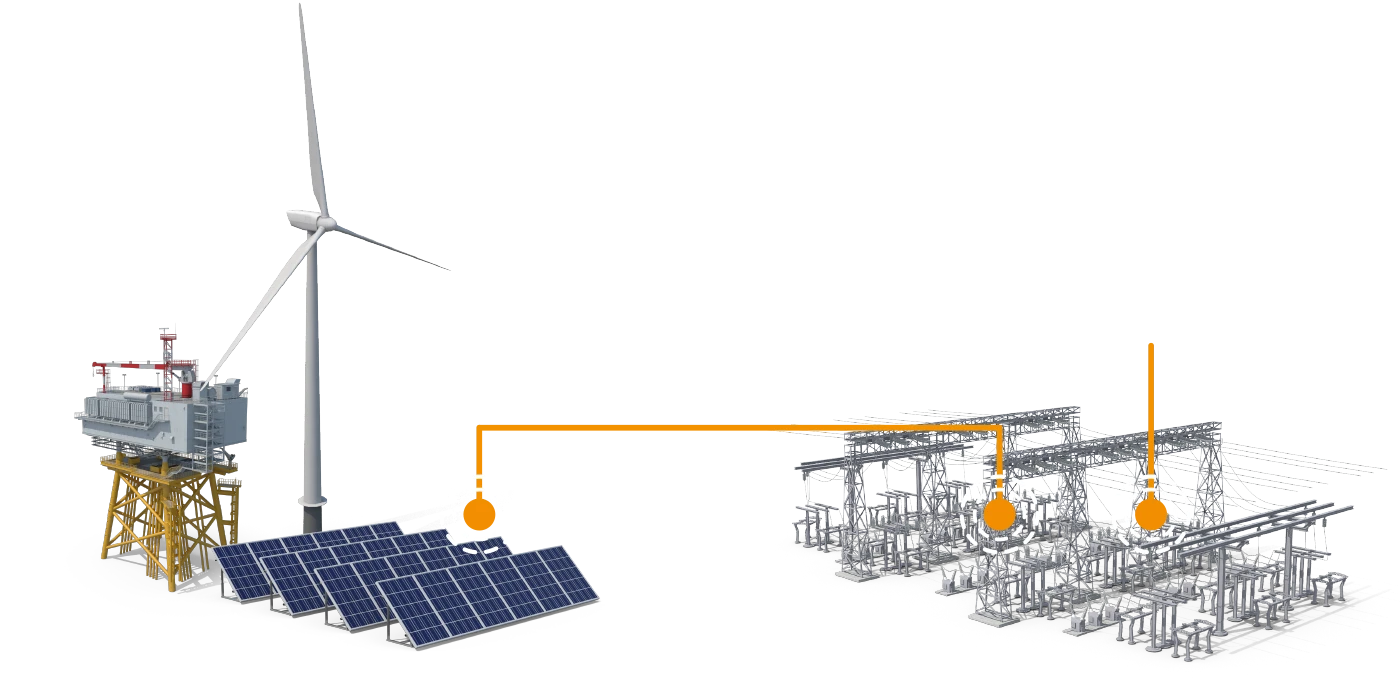

Malfunctioning protection equipment or control systems will cause enormous damage. Analyzing and evaluating these types of errors is a complex endeavor and requires a variety of information obtained from analog measured values, the control/safety signals, and the event history. When attempting to understand the problem, it is often more useful to look at what happened before an error occurred than what happened after. High-quality monitoring systems such as the iba system provide corresponding setting options and adequate buffer memory to record what happened both before and after an event.
Discover how the iba system supports operational excellence and enables visibility for the grids of tomorrow. Schedule a one-on-one call now.
Book Your 1:1 Call
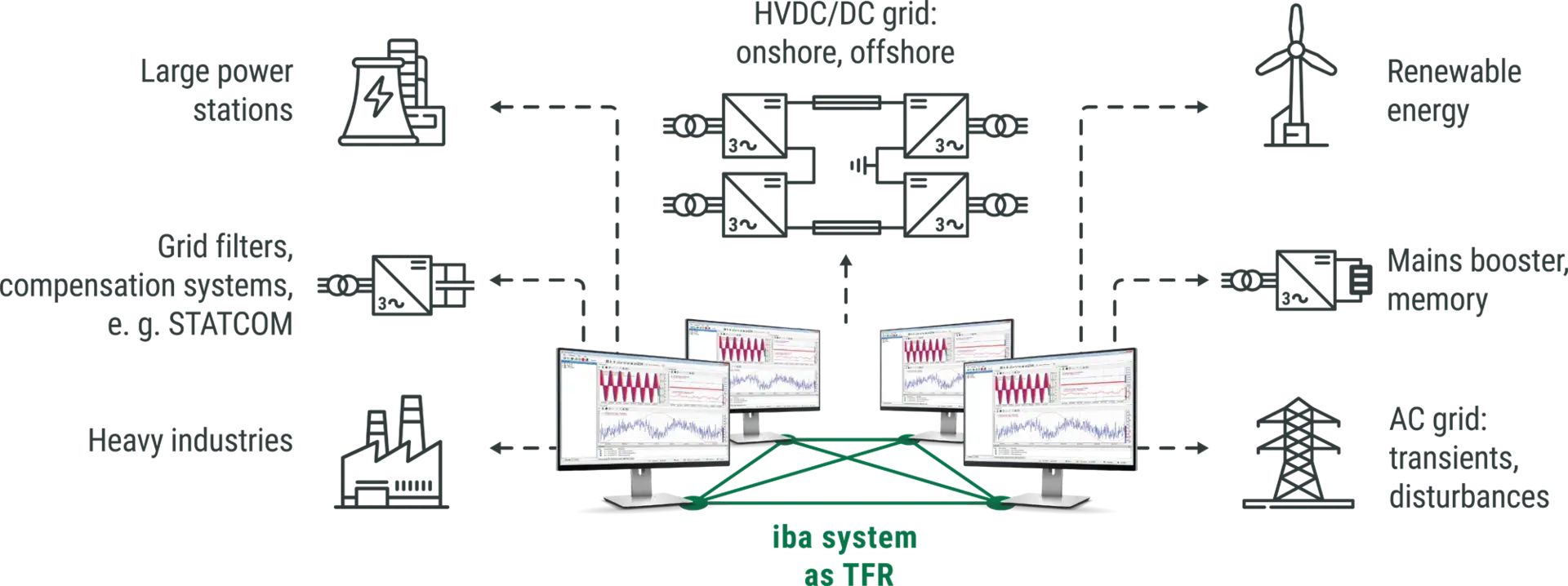
As a high-speed fault recorder TFR (Transient Fault Recorder), the iba system continuously monitors the plants with maximum resolution in order to detect signal faults. If a fault occurs, the signals are recorded in a trigger-driven, high-resolution process. This enables grid faults and other events to be analyzed precisely and their causes to be determined.
You need all of the data, shown in correct chronological order, before you can identify how a system actually responded, run evaluations, and have a basis for deciding on future improvements. The iba system provides this complete set of data. All incoming data can be evaluated and used as a trigger for recording – not just digitalized measured values, but also data from switchgear (IEC 61850), from the controller, from process monitoring, and from power quality measurements.
This functionality is part of every iba system and merely needs to be configured accordingly. Suitable interfaces or fast components for acquiring measured values are important factors here so that dynamic operations can be monitored at ms or even μs level.
The iba system enables several thousand signals per station to be seamlessly monitored at different locations. Triggers are configured for potential failure conditions or other events; these triggers then activate the high-resolution recording of the signals, synchronously and with pinpoint accuracy. Different sampling rates can be configured for the recording – as much as 500 kHz with the new ibaMAQ system.
There is no limit on the number of triggers. You can use an editor to quickly and easily configure trigger conditions with all analog and digital signals or combinations of several signals. Event and status messages via the IEC 61850 protocol, e.g., GOOSE messages, can also be used as triggers. When using the ibaPQU-S power quality unit, the triggers can also be based on grid quality events.
Furthermore, triggers can be bundled in “trigger pools.” A trigger pool enables multiple trigger signals to be configured as start/ stop triggers for the data recording.
If a single ibaPDA system cannot handle all the signals by itself, multiple (up to 5) ibaPDA systems can be connected together in “multi station” mode. All the ibaPDA systems involved work with one another as if they were a single system. They acquire the signals with absolutely synchronous timing and a synchronization accuracy of less than one sample. If a trigger activates the recording process on one ibaPDA system, the recording process also starts at the same time on every other ibaPDA system.
HVDC stations are often located several hundreds if not thousands of kilometers from one another, so it is essential that the measured values are acquired synchronously and the triggers work across the various stations. This technology ensures valuable information is retrieved, including in industrial environments.
When working in “multistation” mode, the iba system is able to cover very large distances, for example several thousand kilometers. When one computer activates the measurement with a trigger, a time stamp is also sent and received by the other computers. This ensures that the data file has the same start time on all the computers. This also works if there is latency because the computers are located far from one another.
The related data files can be opened simultaneously in ibaAnalyzer later on. Both the start time and the samples will match up in all files – as if the signals had been recorded with a single system.
The trend views show the gradient for current and voltage on the AC and DC side when a plant was shut down and then switched back on.
The high-resolution measurement data shows in detail what happened before and after the event. In addition to the AC and DC measured values, the record also documents several thousand signals from the plant controller, all of which have been synchronized down to μs level. As such, the iba system provides developers and the people responsible for plants and operation with rapid, tailored insights into what is happening in the plant.

Download the demo of ibaPDA and ibaAnalyzer and start optimizing your processes today. Try it free of charge for 30 days!
Request an ibaPDA-Demo LicenseThe following functions of the iba system are used in this application.
These leading companies already rely on the iba system.














Successful applications and real solutions with the iba system.
Accurately acquire events in substations: Thanks to its IEC 61850 interfaces, the iba system enables status information to be obtained from the IEC…
Learn moreIdentify optimization potential with power and process monitoring: Power quality measurements are normalized measurements that qualify the voltage…
Learn more
Acquire and analyze energy flows and consumption data: The iba system is ideal for evaluating your energy efficiency as it monitors energy and process…
Learn more
The iba system tells you exactly what is happening in your plants and your energy system. The components are all perfectly coordinated with one…
Learn more