High-Resolution Process Data for Power Plants
How an Australian power utility improved fault analysis through high-resolution process data acquisition with the iba system.
Learn more
Process data forms the foundation of safe and efficient power plant operation. Modern control systems provide a wealth of information about the condition of turbines, generators, auxiliary equipment, and electrical networks. However, many SCADA systems reach their limits when engineers need to analyze short-lived process events or intermittent disturbances. This was precisely the challenge faced by a major power producer in Australia.
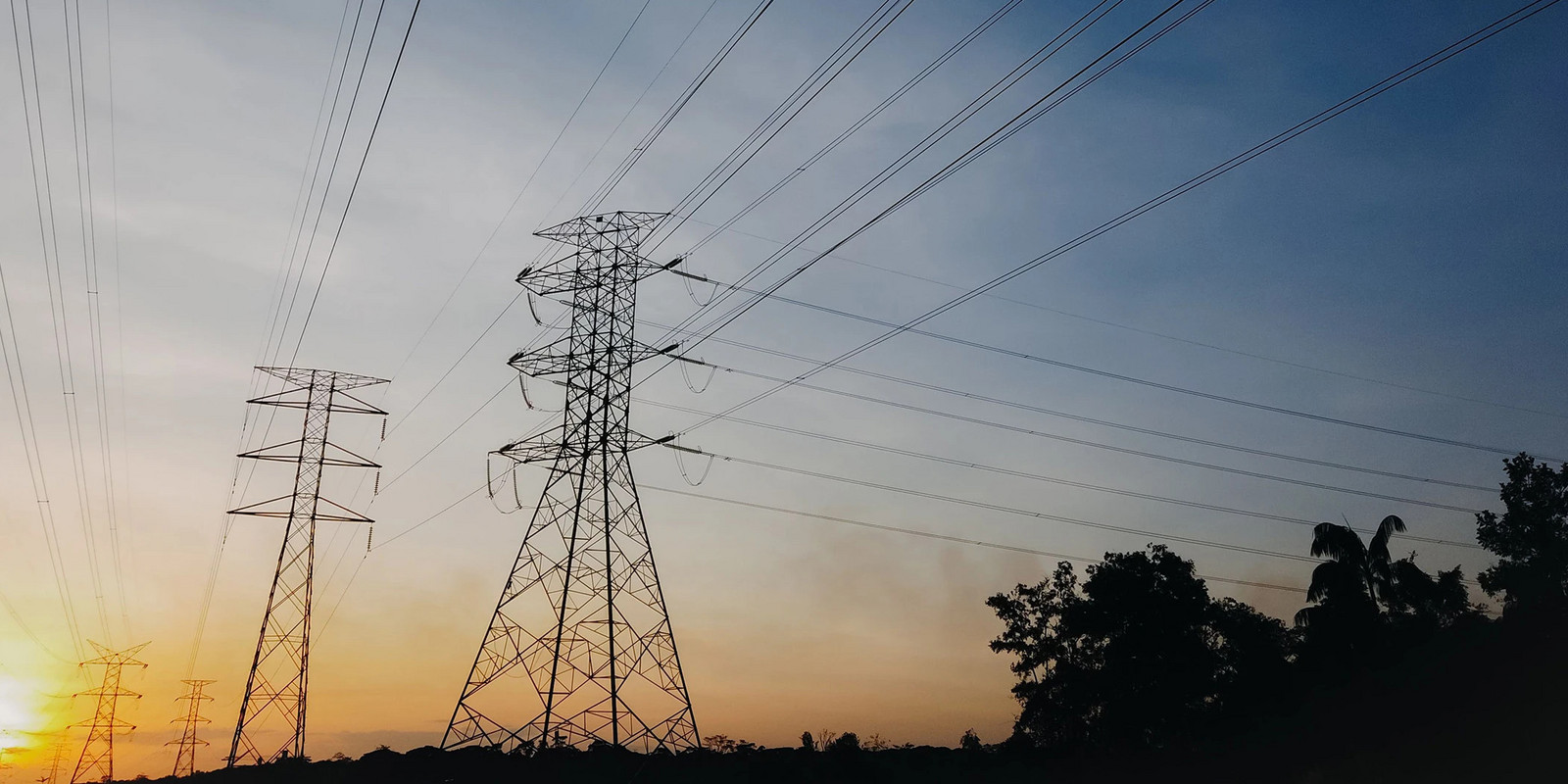
The company operates multiple power stations across a territory roughly twice the size of France. These facilities supply electricity to a region with a relatively small population spread across vast distances. In such an environment, fast and accurate fault analysis is particularly important.
For day-to-day operations, engineers relied on existing SCADA systems to evaluate operational data. However, whenever more detailed investigations were required, the process became cumbersome. Historical data had to be exported, converted into CSV files, and then processed using various analysis tools. At the same time, engineers increasingly questioned whether the available data provided sufficient detail for meaningful root-cause analysis. The utility evaluated ibaPDA to acquire high-resolution process data directly from its Siemens PLCs via Ethernet.
Greater visibility: Fast process events that were previously hidden became visible.
Improved troubleshooting: Engineers gained deeper insights into dynamic plant behavior.
Seamless integration: High-resolution data acquisition without disrupting existing automation systems.
Scalable solution: A flexible foundation for expanding monitoring to additional assets and power stations.
Before, the main limitation was the temporal resolution of the historian data. Many process values were archived at one-second intervals. While this level of detail was adequate for routine operations, it was often insufficient for investigating fast process events.
In power generation environments, significant events can occur within milliseconds. Load changes, control deviations, switching operations, and short-term disturbances often leave only brief signatures in process data. When data is archived only once per second, many of these events disappear between two recorded values. Engineers may know that something happened, but they cannot determine exactly what took place.
To address this challenge, the company began looking for a way to acquire process data directly from its Siemens PLCs and record it with significantly higher resolution. The goal was to create a data foundation capable of providing far more detail than existing historian systems while requiring minimal additional engineering effort.
As part of the evaluation process, a trial installation of ibaPDA was set up. Rather than relying exclusively on archived SCADA data, process values were acquired directly from the existing Siemens control systems via Ethernet-based communication.
This approach fundamentally changes the analysis workflow. Data is acquired at its source before it is condensed, filtered, or otherwise processed by historian systems. As a result, engineers gain a much more detailed view of actual plant behavior. At the same time, the new data acquisition system had to operate without affecting ongoing automation processes. In power generation facilities, it is critical that diagnostic and monitoring systems do not compromise controller performance or availability.
During the evaluation phase, various communication paths and data sources were tested. High-resolution data acquisition was achieved without any measurable impact on PLC scan cycles, meeting one of the key technical requirements for productive use in a power generation environment.

The benefits became apparent during the very first analyses. Engineers were able to examine process behavior at a level of detail that had previously been impossible using historian data alone. Relationships and interactions that had remained hidden suddenly became visible. Short-lived process changes and dynamic effects could be identified and understood for the first time. Events that would have disappeared completely between two one-second data points were now captured in detail and could be analyzed systematically.
The value of high-resolution process data soon extended beyond the original use case. It quickly became clear that similar challenges existed at other generation sites within the organization. Investigations that had previously been difficult or inconclusive could now be carried out much more effectively. In many power plants, historian systems are designed primarily for long-term storage, reporting, and compliance documentation. While they fulfil these functions well, they are not always intended for detailed analysis of fast process events. Combining existing SCADA infrastructure with high-resolution process data acquisition creates a much broader information base for operations and maintenance teams.
Following a successful evaluation, the utility decided to implement its first production system consisting of ibaPDA, ibaAnalyzer, a S7 communication interface to the PLCs and a Modbus communication interface to Si-Tec generator controllers.
The project intentionally focused on a clearly defined application. Rather than launching a large-scale modernization initiative, the company chose to improve data visibility for specific assets and operational challenges. This approach enabled a rapid implementation while delivering tangible results within a short period of time.
Importantly, no extensive modifications to the existing automation systems were required. The company was able to continue using its established infrastructure while significantly expanding the amount of information available for analysis.
Another advantage is the scalability of the iba system. As operational requirements evolve, additional signals, assets, and applications can be integrated without fundamentally changing the architecture.
Valuable insights can often be gained simply by improving access to existing process data. The key factor is not necessarily the quantity of data available, but rather its quality and temporal resolution. For power generation companies seeking faster fault analysis, deeper insight into dynamic process behavior, and greater transparency into actual plant operation, direct acquisition of high-resolution PLC data can provide an effective complement to existing SCADA infrastructure.
Many of the answers operators are looking for are already present within the control system. The challenge is making that information visible. By acquiring process data directly at its source and preserving its full resolution, engineers gain a clearer picture of what is really happening inside their plants and can make better-informed operational decisions as a result.

By acquiring data with the iba system, the engineering team gained visibility into process behavior that had previously remained hidden.
Chris Bosworth
Application Engineer, iba Oceania
The following functions of the iba system are used in this success story.
Read more inspiring success stories of our satisfied customers.
ibaPDA helps utilities capture process data at a much finer time resolution than traditional historian environments. This makes it possible to investigate transient events that occur within milliseconds and would otherwise remain invisible in one-second archives.
By collecting information directly from automation systems, the original signal dynamics are preserved. Engineers can analyse load changes, control deviations, and short-duration disturbances with far greater accuracy. The result is a clearer understanding of plant behaviour, more effective troubleshooting, and improved confidence in operational decision-making.
With ibaPDA, process values can be acquired directly from Siemens PLCs rather than from already archived historian data. This provides access to the original process information before it is filtered, compressed, or aggregated by higher-level systems.
The approach offers greater visibility into real process dynamics and enables engineers to capture events that may never appear in standard archives. At the same time, the evaluated implementation demonstrated that high-resolution acquisition can be achieved without measurable effects on controller scan performance, making it suitable for demanding power generation environments.
A major challenge in power generation is that critical events often occur much faster than standard historian systems can record them. Switching operations, brief disturbances, and control reactions may take place between two archived values, leaving engineers with incomplete information.
ibaPDA addresses this issue by capturing high-resolution process data, while ibaAnalyzer supports detailed post-event analysis. Together, these tools allow engineering teams to reconstruct event sequences more accurately, identify hidden interactions, and gain a deeper understanding of dynamic plant behaviour.
Operational transparency can often be increased by adding a dedicated high-resolution data acquisition layer alongside existing SCADA and automation infrastructure. ibaPDA enables direct access to process data while allowing established systems to continue performing their traditional monitoring and archival functions.
Because no extensive automation redesign is required, utilities can improve analytical capabilities with minimal disruption. This approach provides maintenance and operations teams with more detailed insight into plant behaviour while preserving the value of existing infrastructure investments.
Scalability is a key factor when adopting industrial data acquisition in power generation environments. Rather than launching large modernization programmes, many utilities prefer to start with a focused application and expand capabilities over time.
ibaPDA supports this strategy by allowing additional assets, signals, and use cases to be integrated as operational requirements evolve. This staged implementation approach delivers early value while preserving flexibility for future growth. Utilities benefit from improved data visibility today and a foundation that can support broader analytical requirements in the future.