How FEST Makes Process Data Usable for Operations, Analysis and Maintenance
Based on the iba system, FEST has developed a data architecture that covers the entire process.
Learn more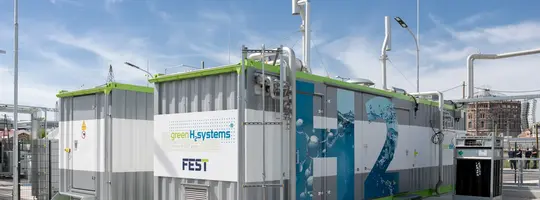 FEST Group
As the hydrogen economy grows, so do the demands placed on the operation of electrolyzer plants. Operators expect high availability, transparent performance indicators, and rapid root cause analysis in the event of faults. At the same time, modern PEM electrolyzers generate large volumes of operating and process data that can provide valuable insights into the condition and behavior of the plant.
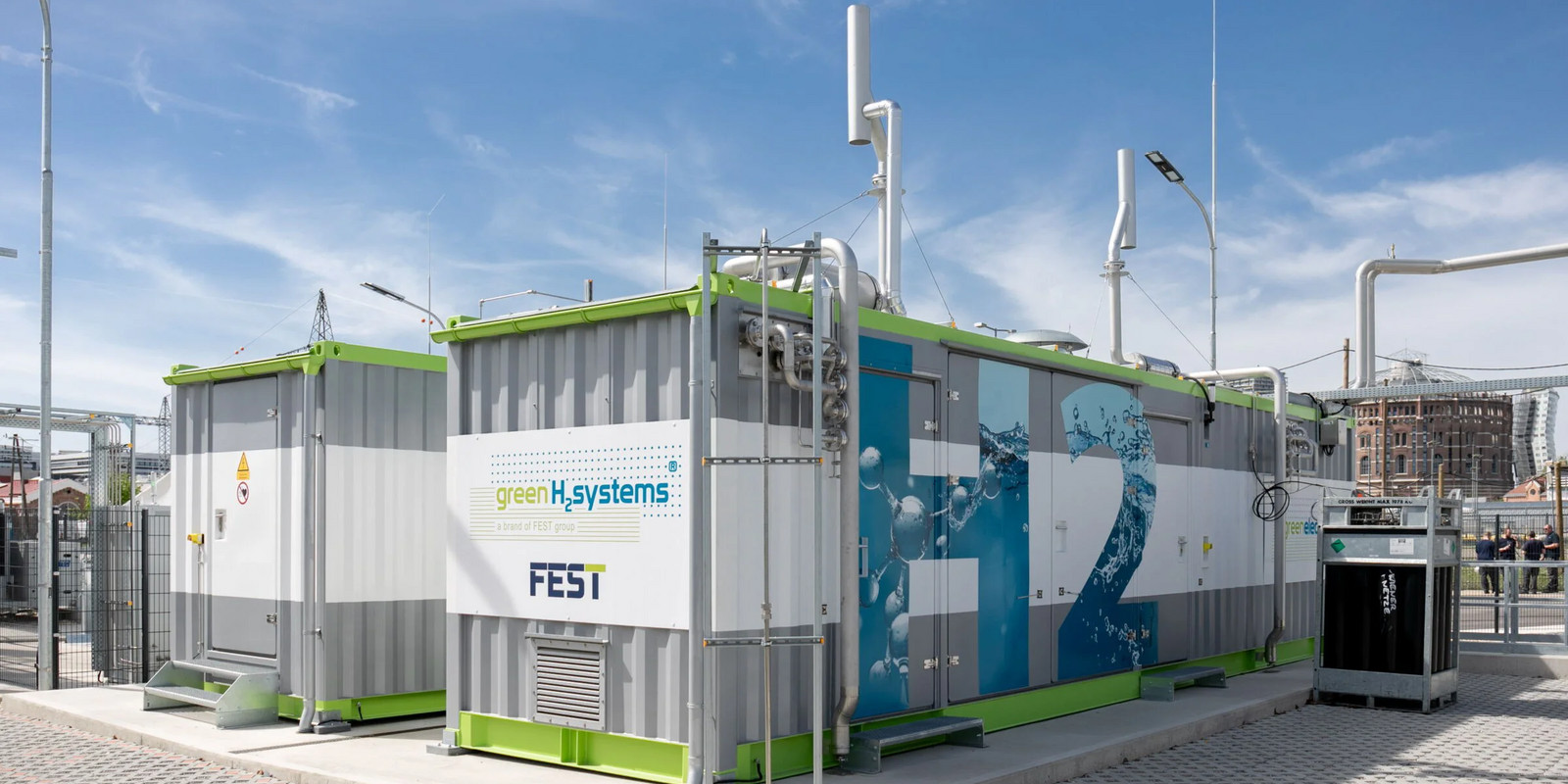
The real challenge, however, is not data acquisition itself. Modern electrolyzer plants consist of numerous different systems that continuously generate data. In addition to the electrolyzer stacks themselves, the power supply, water treatment, cooling systems, compressors, as well as automation and safety systems all provide relevant information. When these data are considered in isolation, the overall picture often remains incomplete. Only when information from different sources is continuously available, time-synchronized, and can be analyzed together is it possible to identify correlations, investigate root causes, and make well-founded decisions.
Based on the iba system, FEST has therefore developed a data architecture that covers the entire process from signal acquisition through analysis and reporting. This creates a consistent data foundation that supports both day-to-day plant operation and long-term optimization.
An electrolyzer plant continuously generates information from a wide variety of sources. This includes process variables such as pressure, temperature, and flow, as well as electrical operating data, energy consumption, plant states, and messages from the control systems. From the outset, FEST recognized that these data are not only required for process control but must also be available for service, performance analysis, reporting, and long-term plant optimization.
The foundation for this is local data acquisition using ibaM-DAQ. To ensure that data can be acquired independently of network connections, FEST equips each electrolyzer container with a dedicated acquisition unit. Since ibaM-DAQ provides the full functionality of ibaPDA, relevant process and control signals are continuously acquired from the control systems and recorded with high time accuracy.
This approach allows even high-resolution measurement data to be stored continuously without placing additional load on the existing automation infrastructure. The recorded data provide a comprehensive representation of plant operation and are available for both current evaluations and subsequent analyses.
As the number of installed plants increases, cross-site data management becomes increasingly important. FEST therefore aims to consolidate information from different electrolyzer plants within a common data platform.
Locally acquired process data are centrally consolidated and placed into a common context. This creates a unified view of the installed plant base, regardless of the system or plant component from which the data originally originated. Operating states, process values, and events can be viewed in a time-synchronized manner and compared across multiple plants.
For service and engineering teams, this provides significantly greater transparency. Recurring events, anomalies, or differences in operating behavior can be identified more quickly and evaluated systematically. At the same time, relevant KPIs can be made available to specific target groups via cloud technologies and online dashboards. For detailed investigations, users can drill down at any time to the raw data stored in the iba system.

The key is drawing the right conclusions from data. The iba system helps us do exactly that.
Jan Remus
Vice President PMO & Digital Solutions, FEST
For FEST, the real value comes from systematically analyzing the recorded information. Using ibaAnalyzer, the company examines historical signal trends, analyzes process correlations, and evaluates operating conditions over extended periods. In addition, relevant KPIs are automatically consolidated into reports and made available in a consistent format.
“Large volumes of data do not automatically translate into knowledge,” says Jan Remus, Vice President PMO & Digital Solutions at FEST. “What matters is drawing the right conclusions from the available information to improve operations and optimization. The iba system provides us with a powerful tool for doing exactly that.”
The benefits of this approach are particularly evident when dealing with sporadic faults. Instead of looking solely at the moment when an alarm occurs, engineers can analyze the entire process sequence before and after an event.
This reveals correlations that are often difficult to identify during ongoing operation.
Building on this data foundation, FEST is developing its own AI-enabled dashboard platform. The system already supports service evaluations and the analysis of production data, combining structured plant data visualization with the gradual introduction of AI-assisted functionalities. In doing so, FEST complements iba technology with its own expertise in plant operations and process engineering.
“A clean and reliable data foundation is essential for any advanced analysis. Only when measurement, production, and quality data are consistently consolidated can process relationships be identified and evaluated in a meaningful way,” explains Andres Moreno, Data Scientist at FEST.
One focus of the ongoing development is the integration of measurement, production, and quality data into a common analytical framework. AI is intended to support this effort by making relationships within plant behavior more transparent and by providing indications for further investigation. However, expert assessment based on recorded process data remains a critical part of the analysis and decision-making process.
Discover how the iba system supports operational excellence and enables visibility for the grids of tomorrow. Schedule a one-on-one call now.
Book Your 1:1 Call
For long-term data archiving and analysis, FEST uses ibaHD-Server. The platform enables the centralized storage of large volumes of historical time-series data and makes them available for further analysis.
Based on these data, typical operating conditions can be defined and relevant parameters monitored over the long term. Changes in plant behavior can be detected at an early stage, before they lead to process problems or unplanned downtime. Since all information is based on a consistent data foundation, developments can be tracked and evaluated over extended periods.
For FEST, this represents an important step toward data-driven maintenance. Maintenance activities can be planned more precisely, while service interventions can be better prepared. Particularly for internationally distributed plants, this reduces troubleshooting effort and improves the predictability of service activities.
Building on this foundation, FEST is further developing the platform toward predictive maintenance applications. By correlating the available process, production, and quality data and extending AI-assisted analytical capabilities, future versions will help identify emerging maintenance needs and potential equipment issues at an earlier stage. The objective is not to replace engineering expertise, but to provide focused decision-support functions for plant operators, service specialists, and engineering teams.

Only when measurement, production, and quality data are consistently consolidated can process relationships be identified and evaluated in a meaningful way.
Andres Moreno
Data Scientist, FEST
FEST’s experience shows that simply acquiring process data does not in itself create added value. What matters is the ability to combine information from different sources and use it to create a consistent picture of plant operation.
With ibaM-DAQ, ibaPDA, ibaAnalyzer, and ibaHD-Server, FEST has established a platform that covers the entire lifecycle of process data—from acquisition and storage to analysis and reporting. This provides a unified view of complex plant structures, creates transparency, and enables data-driven decision-making.
In addition, FEST uses ibaDatCoordinator for post-processing measurement data. The software handles automated processing and data management, generates reports, extracts relevant KPIs, and makes them available to downstream systems. This allows recurring analysis and reporting tasks to be standardized and carried out without manual effort.
This end-to-end data foundation helps FEST better understand plant conditions, analyze faults more quickly, and plan maintenance activities more effectively. At the same time, it provides the basis for comparing operating behavior across different sites and continuously optimizing the long-term performance of electrolyzer plants.
Read more inspiring success stories of our satisfied customers.
The iba system provides the foundation for reliable industrial data acquisition in electrolyzer plants. It continuously records process and control signals from multiple subsystems, including stacks, power supply units, water treatment systems and cooling circuits. High-resolution recording with precise time synchronization creates a comprehensive operational data set without placing additional load on the automation environment. This gives operators and engineering teams access to consistent information for daily operation, troubleshooting and long-term performance evaluation. As a result, plant behavior can be documented transparently and relevant data remains available for both immediate investigations and future analysis.
ibaPDA, as the underlying data acquisition technology, enables the precise synchronization of signals originating from different plant systems. Electrolyzer facilities generate large volumes of operational information across many subsystems, and these data points often influence each other. When process values, operating states and events are analyzed within a common timeline, hidden relationships become visible and root causes can be identified more effectively. This supports advanced industrial analytics and improves transparency across distributed assets. In practice, maintenance and engineering teams gain a clearer understanding of plant behavior and can resolve issues more efficiently.
ibaAnalyzer helps engineers perform detailed investigations of historical process data to identify the true causes of plant disturbances. Rather than focusing only on alarm timestamps, users can evaluate the complete sequence of events before and after an incident. This makes it easier to uncover dependencies between process variables and understand how operating conditions evolved over time. The software supports both event-based diagnostics and long-term trend evaluation. For operators and service teams, this means faster root cause identification, better insight into recurring operational patterns and more informed decisions regarding process optimization.
ibaHD-Server serves as a central repository for large volumes of historical time-series data and forms the basis for effective condition monitoring. By retaining operational information over extended periods, organizations can establish reference operating conditions and continuously observe critical parameters. Long-term comparisons make it possible to detect gradual changes in equipment behavior and assess developing trends before they lead to process disruptions. This data-driven approach improves maintenance planning and supports more informed operational decisions. In practice, companies benefit from increased transparency, improved plant availability and better preparation for service activities.
ibaDatCoordinator automates the post-processing of recorded process data and streamlines KPI generation and reporting workflows. It evaluates measurement data, extracts relevant performance indicators and makes the results available to downstream applications. This reduces manual effort while ensuring that analyses are based on consistent and repeatable data structures. Integrated into a broader data management environment, the software supports a seamless workflow from data acquisition through analysis to reporting. For users, the key benefit is efficient access to reliable information that supports operational decisions, service activities and continuous performance improvement initiatives.