How FEST Makes Process Data Usable for Operations, Analysis and Maintenance
Based on the iba system, FEST has developed a data architecture that covers the entire process.
Learn more FEST Group
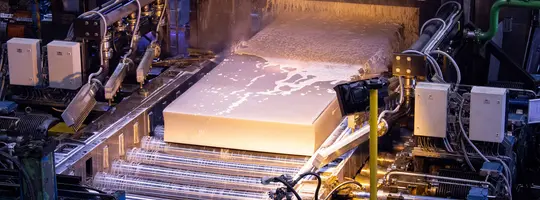
Over 1,600 tons of metal, rolled into coils, pass through the BILSTEIN Group’s production facilities every day. To eliminate the risk of mix-ups, the global player relies on the ibaDatawyzer-ICC coil identification software from iba AG.

With a production of over 600,000 tons per year, the BILSTEIN Group is one of the world’s leading manufacturers of cold-rolled steel strip. Despite the enormous quantity of coils produced, no two metal strips are the same.
“We are not a classic mass manufacturer, but rather we explicitly respond to customer requirements. It is therefore essential to have flexible production and to coordinate and monitor it,” says Ufuk Karvan, who is responsible for process and system technology at the cold-rolled strip manufacturer. BILSTEIN products are used in tool production and in the construction and automotive industries.
BILSTEIN’s production area covers around 700,000 square meters. This makes it all the more important to be able to identify and determine the coils throughout the entire production chain. “Our process routes are quite complex and, in addition, every human intervention is a small potential source of error. That’s why we want and need to detect material mix-ups at an early stage,” says Karvan. To ensure this, the BILSTEIN Group relies on ibaDatawyzer-ICC, the coil identification software from iba AG.
“With ibaDatawyzer-ICC, a patented fingerprint process comes into play: each coil develops a characteristic thickness profile over the length of the strip during rolling. Using this specific curve, which is recorded online with thickness measurement systems and is unique for each coil like a human fingerprint, we can reliably identify coils and rule out mix-ups,” says Karvan. To do this, ibaDatawyzer-ICC uses the process data recorded with ibaPDA to generate unique features for each coil, which are then stored in a database for long-term availability.

At the BILSTEIN plant in Hagen, hot-rolled coils are first cut to size and then further processed using heat treatment, rolling and cutting processes. “We receive a hot strip that we cut into different strips. These all have the same width, quality and hot-rolled strip properties, so they are basically identical. That’s why a mix-up could easily happen here,” reports Karvan. It becomes particularly critical if the metal strips are assigned to the wrong order and are not processed correctly: “If a coil is mixed up, then in the worst case we could no longer supply a customer and would have to wait for a suitable hot-rolled strip to arrive. On top of that, around 25 tons of material would be scrap. At a value of around €2,000 per tonne, you can quickly calculate the damage that would be caused,” says Karvan. BILSTEIN eliminates this risk with the use of ibaDatawyzer-ICC: “With the system, we not only see immediately if something doesn’t fit somewhere, but are also shown the correct coil directly,” says Karvan, who is completely satisfied with the iba solution. BILSTEIN’s internal database now contains over 180,000 entries, each of which contains the specific characteristics of the respective coil. Nevertheless, “the needle in the haystack can be found in a matter of seconds,” says Karvan.

Like a human fingerprint, the longitudinal thickness profile is unique for each coil.
Ufuk Karvan
Head of Process and Systems Engineering, BILSTEIN
BILSTEIN also relies on the iba system to monitor the various plants, with almost 60 ibaPDA (Process Data Acquisition) systems in use for data acquisition. Together with iba, BILSTEIN has developed a very special application for the web-based dashboard tool ibaDaVIS: By consistently linking ibaDatawyzer-ICC, which monitors the coils during the individual production steps in the background, with ibaDaVIS, long-term observations can be made and thus trends and further optimization potential can be identified. In this way, for example, the error-free functioning of the measurement technology used can be permanently verified or comprehensive reports can be created for individual coils. “The fact that we can carry out long-term analyses with ibaDaVIS and ibaDatawyzer-ICC has huge added value for us. A number of ideas have already emerged from the insights we have already gained there. So far, we are the first and only ones to do this,” reports Karvan.
Download the demo of ibaPDA and ibaAnalyzer and start optimizing your processes today. Try it free of charge for 30 days!
Request a ibaPDA-Demo License
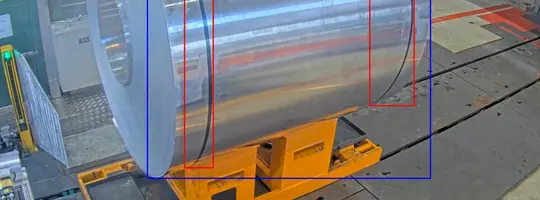
For coil identification, ibaDatawyzer-ICC primarily uses the longitudinal thickness profile of the rolled coil. As the material thickness is usually measured at the exit of one production step and at the entrance of the next, the longitudinal thickness profile can be used as an inherent feature to identify the coil. Using this patented fingerprint technology, ibaDatawyzer-ICC determines the unique characteristic from a longitudinal thickness profile at prominent points in the signal curve, such as maxima and minima. In the analysis, the software then determines the number of matches between the longitudinal thickness profiles of the output and input measurements. To correctly assign a coil, this must then be above a system-specific limit value. However, if the match rate is lower, this indicates either poor data quality or a mix-up. In this case, ibaDatawyzer-ICC highlights the entry in the visualization in colour and automatically searches for more suitable coils. In this way, coil mix-ups and undocumented rewinding processes are detected in good time.
The following functions of the iba system are used in this success story.
Read more inspiring success stories of our satisfied customers.
Reliable identification can be achieved using characteristic process features such as the longitudinal thickness profile, which is unique for each coil. With ibaDatawyzer-ICC, this profile is used as a “fingerprint” to assign coils unambiguously. The required process data is acquired and processed using ibaPDA. This ensures end-to-end traceability even across complex process routes.
Material mix-ups can be identified through continuous comparison of process data across different production stages. ibaDatawyzer-ICC compares characteristic signal profiles and evaluates their similarity based on defined thresholds. In case of deviations, automatic flagging and alternative matching procedures are triggered. This enables immediate corrective action before faulty downstream processing occurs.
A high-performance database combined with dedicated feature extraction enables rapid identification of individual objects within large datasets. ibaDatawyzer-ICC generates distinctive features from process data and stores them for long-term use. In combination with ibaPDA, this creates a scalable data foundation for fast queries. As a result, individual products can be identified within seconds, even in very large datasets.
Long-term data enables the identification of trends, deviations, and optimization potential across multiple production cycles. With ibaDaVIS, this data can be visualized and systematically analyzed in dashboards. In combination with ibaDatawyzer-ICC, product-specific analyses can be performed. This supports both quality assurance and continuous process improvement.
Continuous validation of measurement data is achieved by comparing signal patterns across multiple process stages. ibaDatawyzer-ICC detects deviations that may indicate faulty sensors or inconsistent data. Through integration with ibaDaVIS, these deviations can be visualized and analyzed transparently. This enables early detection of measurement errors and ensures sustainable improvement of data quality.