How FEST Makes Process Data Usable for Operations, Analysis and Maintenance
Based on the iba system, FEST has developed a data architecture that covers the entire process.
Learn more FEST Group
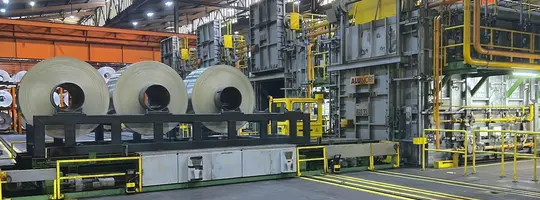
The commissioning of a new pusher type furnace at their Swiss location prompted Novelis to standardize the acquisition and analysis of process data. Based on existing experiences, good scalability, and comprehensive connectivity, they chose the iba system, which now provides the aluminum producer with exclusive process insights.
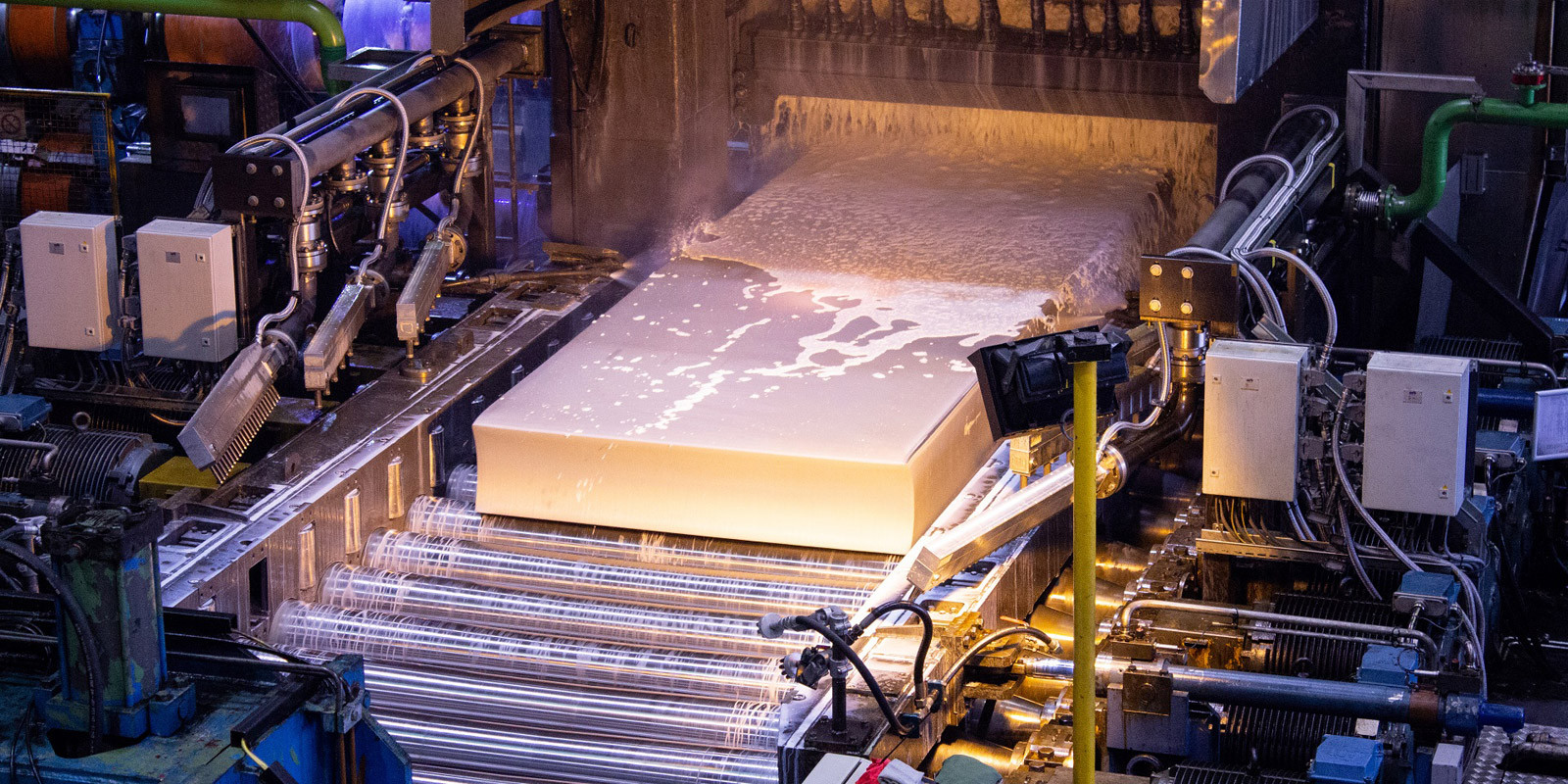
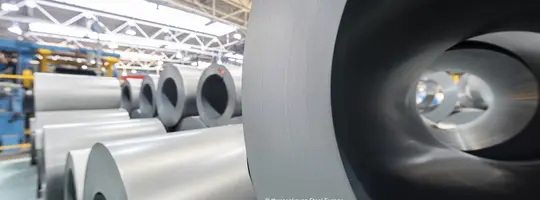
Novelis is the world’s leading producer of flat-rolled aluminum products. The company supplies high-quality sheets to the automotive and aerospace industries, among others.
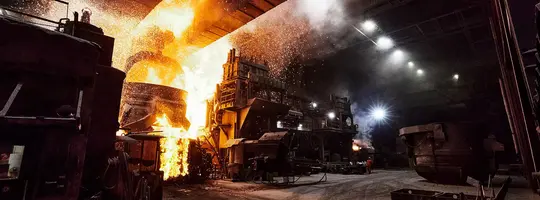
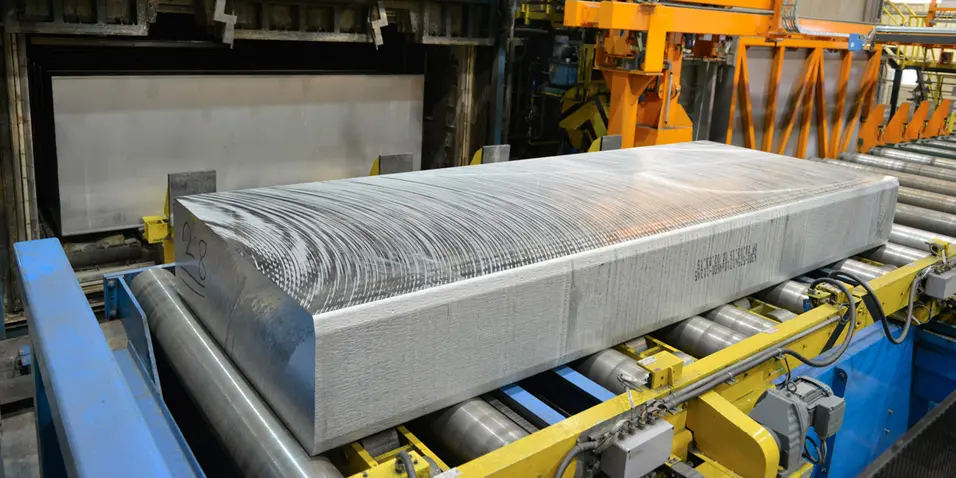
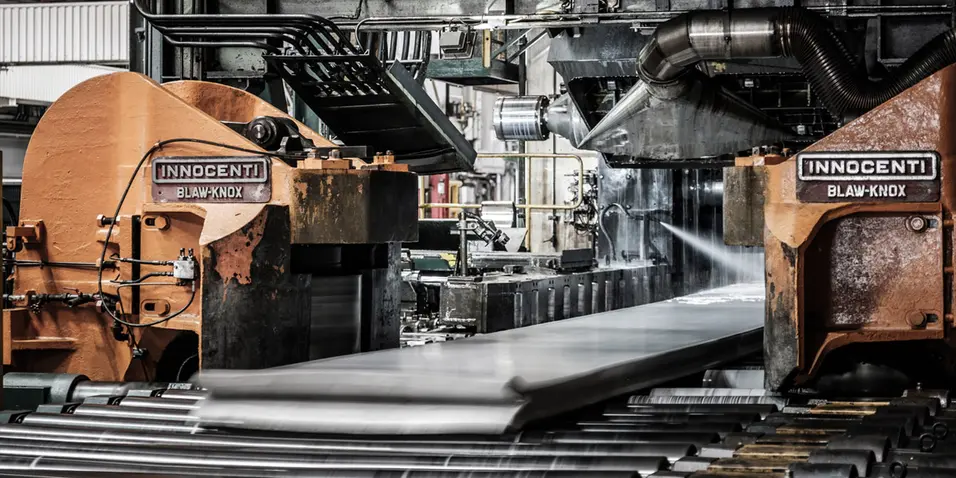
Novelis operates technologically advanced rolling and recycling facilities in North America, South America, Asia, and Europe. At its plant in Sierre, Switzerland, Novelis covers the entire process of aluminum production – from casting to finishing. The commissioning of a new pusher furnace gave the company the occasion to standardize the data acquisition and analysis of a plant.
“We collected a variety of data in our processes but hadn’t used a unified system for this in the past. We wanted to address this to simplify data evaluation. We also wanted to create an individual data set for each product, which was quite a challenge with up to 30 products simultaneously in the furnace,” explains Bernard Cavin, a process engineer at Novelis responsible for this area.
Cavin, who had been responsible for the hot and cold rolling production sectors for many years, drew on his experiences – his company also chose the solution from iba AG based on his recommendation: “I am a long-time user of the iba system because I’ve always been impressed by their customer orientation. We’ve successfully implemented projects with the iba system in the past, so we wanted to establish it as our standard,” says Cavin.
With the iba system, high-resolution process and machine data as well as descriptive setup data can be acquired, recorded, evaluated, and further processed using perfectly adjusted software and hardware components. Because the system is easy to scale due to its modular design, it is suitable for both troubleshooting a PLC with 64 signals and monitoring a large plant with several tens of thousands of signals. “In the first step, we adapted a sample project to our environment together with iba. This went very quickly. The biggest job was then to sort and structure the countless PLC data, as some signals were irrelevant to our purposes,” says Cavin. For this, the project managers ultimately defined about 500 signals, which were then compiled into PDO analysis rules. In addition to the ibaPDA acquisition software and the ibaHD-Server for long-term storage, Novelis also uses ibaDatCoordinator, which automatically processes the generated measurement files and extracts relevant key figures into databases using the analysis rules created once. “Soon we will have the entire process mapped in the iba system and can then easily transfer the results to other plants, such as our next furnace, which we will receive in 2025,” Cavin looks ahead.
A major benefit for Novelis is the Time-Periods function of the iba system: This allows the data recorded in the ibaHD-Server to be structured using freely definable trigger conditions and assigned to the corresponding products. The Time-Periods can then be enriched with additional info fields or key figures and evaluated offline. “With the Time-Periods, we index all relevant process values, such as the data from the furnace to an individual ingot ID. Only with this function we were able to achieve this – despite processing up to 30 products simultaneously. We then conducted calculations in ibaAnalyzer for each ingot during post-processing and ensured product quality by proving that everything ran process-compliant,” says Cavin. Since a large part of Novelis’ products are used in the automotive industry for body construction, proving clear traceability is of high importance. Additionally, there is long-term process control of the plants: “It is also important for us to conduct long-term analyses and derive statistics from them. This allows us to quickly see if everything is stable. For example, we can detect a leak in the furnace early based on heating time, which could otherwise affect the material,” says Cavin.

Our plan is to further standardize on the iba system in the future.
Bernard Cavin
Process Engineer, Novelis
Another revealing insight comes from considering energy values: Cavin reports: “Thanks to the various PLC connectors of the iba system, we can also easily capture data from energy, gas, or electricity meters together with the process data and connect it to the product.” The insights gained with iba are relevant for different user groups: While process engineers evaluate the data to identify process deviations and make optimizations, quality managers use statistical data to gain insights into product quality. Particularly valuable here is the ability to access raw data for more detailed analysis at any time via drill-down. Standardizing the analysis also pays off at this point: “We can now all work with one system. If someone wants to look at the data, they can do so with ibaAnalyzer, down to the operator level. Therefore, our plan is to further standardize on the iba system in the future,” says Cavin.

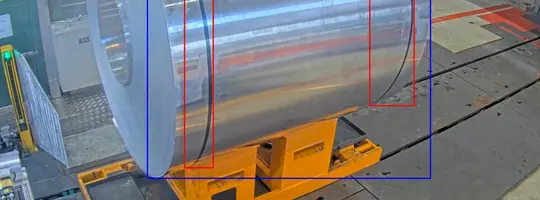
With the help of the Time-Periods function, Novelis was able to create an individual data file for each ingot, even with up to 30 products being processed simultaneously.
Download the demo of ibaPDA and ibaAnalyzer and start optimizing your processes today. Try it free of charge for 30 days!
Request a ibaPDA-Demo LicenseThe following functions of the iba system are used in this success story.
Read more inspiring success stories of our satisfied customers.
Standardization requires harmonizing data acquisition, structuring, and analysis across all plants. With ibaPDA, heterogeneous PLC and process data can be centrally acquired and transformed into a consistent data model. In addition, ibaHD-Server enables long-term storage and uniform use of the data. This creates a continuous foundation for analysis and optimization across different production areas.
Assigning process data to individual products requires structured segmentation of continuous data streams. With the Time Periods function in ibaHD-Server, data can be divided into product-specific time segments based on defined triggers. These segments can be enriched with IDs and additional metadata and evaluated in a targeted manner. In combination with ibaAnalyzer, this enables detailed traceability down to the individual product level.
The key challenge lies in selecting relevant signals and organizing them systematically. With ibaPDA, extensive signal sets can be filtered and transformed into structured analysis configurations. ibaDatCoordinator then enables automated processing and extraction of relevant key metrics. This reduces complexity and significantly improves data analysis efficiency.
Holistic process analysis requires the integration of different data sources such as energy, gas, or electricity consumption. Thanks to the connectivity of ibaPDA, these data can be acquired in parallel with production parameters. Centralized storage in ibaHD-Server enables consistent analysis in the context of individual products or processes. This makes it possible to identify efficiency potential and correlations between energy usage and product quality.
A modular system architecture is essential to support both small installations and complex production lines. ibaPDA can be flexibly scaled from a few signals to several tens of thousands. In addition, ibaHD-Server allows expansion of storage capacity for long-term data analysis. This enables data models and analysis strategies developed once to be easily transferred to additional plants.