How FEST Makes Process Data Usable for Operations, Analysis and Maintenance
Based on the iba system, FEST has developed a data architecture that covers the entire process.
Learn more FEST Group
As the legacy system no longer met operational demands, the BILSTEIN GROUP had to seek out a new solution for process data visualization. Their choice: the iba system. With ibaDaVIS, the cold-rolled strip specialist now benefits from a web-based visualization and analysis tool that provides a significantly broader and more detailed view of its process data. As a result, problems can not only be resolved faster but also proactively analyzed using new evaluation capabilities.

For many years, BILSTEIN had relied on a process data visualization system that was partially based on MS-DOS. With the system discontinued and spare parts no longer available, an alternative had to be found.
“We’ve already implemented many iba-based solutions in our maintenance operations and are very satisfied with them. That’s how we came across ibaDaVIS,” explains Ufuk Karvan, Head of Process and Systems Engineering at BILSTEIN. In a first step, the specialist for cold strip solutions recorded example data and ultimately decided to implement the iba system on its new rolling mill. “By now, we’ve equipped 13 lines with the system, with two more currently being set up. That’s already about half of our entire plant,” Karvan says.
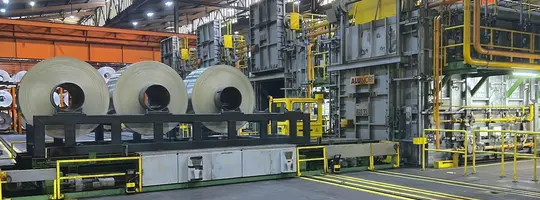
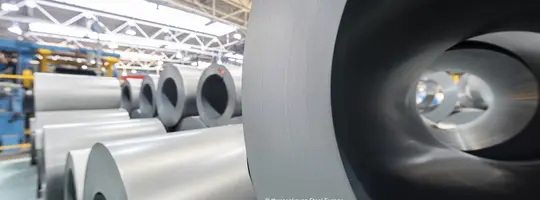
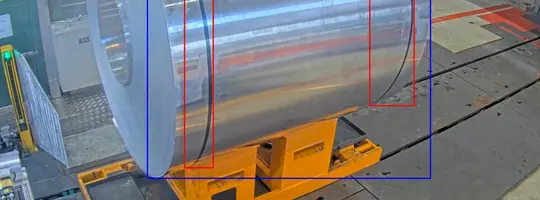
At the cold rolling mill in Hohenlimburg, all steps from shearing to material hardening are now instrumented with measurement technology. Thanks to the standardization of certain signal types, process steps across different lines can easily be compared – revealing optimization potential. In addition, continuous data acquisition enables precise analysis of the manufactured products. “When we review the process steps associated with a particular coil, for example, we can see exactly how it was rolled or skin-passed. This allows us to compare individual production sequences from the tandem mill to the shear line,” Karvan continues. “For us, this represents a major step toward Industry 4.0.”


Before the system was rolled out, shift supervisors, foremen, application engineers and maintenance personnel were involved in compiling the requirements. This ensured that BILSTEIN could determine which signals, KPIs, visualizations and long-term recordings were needed for quality assurance and inspection. “The result is a massive process landscape, and thanks to the iba system, we now have access to far more data than before. We can now visualize things that were previously impossible to display. That helps us resolve issues more efficiently – and as a result, we’ve gained strong support across the plant,” Karvan says.
Another key factor for the flat steel expert was the easy accessibility of process data. Thanks to ibaDaVIS, users can quickly access process data, export data sets, and dive deeper using ibaAnalyzer. This leads to a genuine democratization of data, as Karvan emphasizes: “We currently have around 100 users. Whether it’s the lab, application engineers, shift leaders or operators – everyone can access and work with the data directly through the web browser, without needing to go through someone else.”

The iba system helps us to resolve issues more efficiently – and as a result, we’ve gained strong support across the plant.
Ufuk Karvan
Head of Process and Systems Engineering, BILSTEIN
The iba solution has already proven itself in various scenarios: for example, when commissioning a new cold rolling line, reference values from existing lines could be used to implement optimizations quickly. However, one insight came as a real surprise: “The scrap statistics were truly eye-opening. We can now see exactly where and how much scrap is generated. Previously, that was a huge question mark – but now we can pinpoint it precisely, address the root causes, and improve the scrap statistics accordingly. The necessary measures can be derived directly from the data. Every improvement here saves us real money and helps us make our CO₂ balance greener,” Karvan states.
Of course, there are still minor adjustments that can be made to the current iba setup, but “for the most part, our requirements have been met. And iba responds quickly to our requests. All of this contributes to us expanding the use of the system even further,” Karvan concludes.
Download the demo of ibaPDA and ibaAnalyzer and start optimizing your processes today. Try it free of charge for 30 days!
Request a ibaPDA-Demo LicenseThe following functions of the iba system are used in this success story.
Read more inspiring success stories of our satisfied customers.
A browser-based solution enables location-independent access to process data without the need for local software installation. With ibaDaVIS, users from production, maintenance, and quality assurance can simultaneously access the same data. The unified data foundation reduces coordination effort and accelerates problem analysis. This promotes broader use of data in daily operations.
Comparability requires standardized signals and KPIs across different plants. With ibaPDA, this data can be consistently acquired and structured. In ibaDaVIS, the data can then be visualized and analyzed across multiple plants. This enables direct comparison, helping to identify deviations and optimization potential.
Detailed root cause analysis requires end-to-end traceability of process steps for individual products. With ibaPDA, all relevant process data is captured along the entire production chain. ibaDaVIS enables structured visualization of this data, while ibaAnalyzer supports in-depth analysis. This allows precise identification of error sources.
Systematic evaluation of process data enables precise allocation of scrap volumes to specific process steps. With ibaDaVIS, relevant KPIs can be visualized and analyzed. In combination with ibaPDA, this creates a reliable data foundation for identifying root causes. This enables targeted measures to reduce material losses and costs.
Tight integration of visualization and analysis reduces system fragmentation and accelerates insight generation. ibaDaVIS provides a fast overview of relevant data, while ibaAnalyzer enables detailed evaluations. The direct transfer of datasets between both systems simplifies the analysis workflow. This allows optimization measures to be derived and implemented more quickly.